
Plants for cultivation
Developing reproducible propagation methods to supply genetically defined planting material for research and growing.


SIP‑T, Inc. is a research corporation building scientific and commercial infrastructure to conserve valuable Camellia sinensis cultivars, predict how they can be reliably propagated, and converted into planting material, production systems, and differentiated tea products.
Davis, California · Established 2016
Precision systems,
Reproducible results.
Resilient commercial platforms.
Our purpose
Tea’s future depends on its diversity—and on the knowledge to sustain it.
Our purpose is to build the scientific foundation for sustainable, climate-resilient tea production. We bring together plant science, chemistry, microbial research, and production expertise to help conserve valuable cultivars and develop new ways to grow and understand tea.
Our vision extends from U.S. production to locally adapted systems worldwide, while respecting the growers, traditions, and regional identities that give tea its value.
The research pathway
Four connected areas of work. Explore how each contributes to the whole.
Genetically distinct tea cultivars carry different growth, chemistry, and flavor characteristics. Our research connects cultivar identity and provenance with documented plant material, creating a foundation for conservation and reproducible experiments.
Cultivar identity & experimental evidence
Understanding the plant is the starting point. Genetic characterization and culture-response measurements help define the factors that influence cultivar-specific propagation.
Figures from WO 2024/145233 A1, AcTEAvator™ System, The Regents of the University of California. Figures describe the reported research.
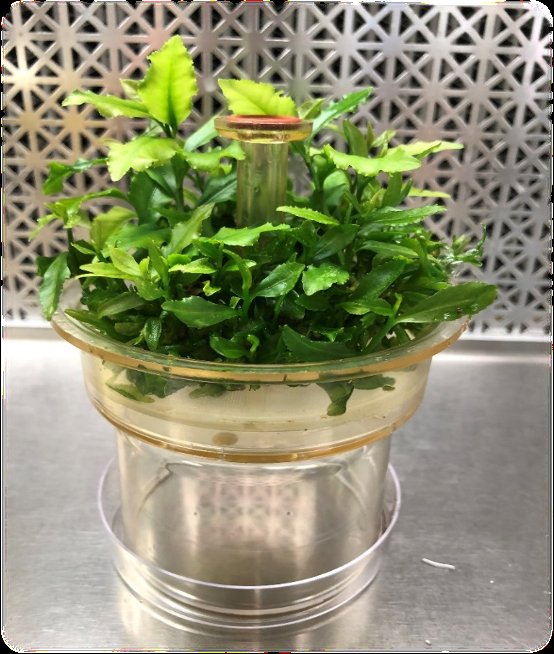
The AcTEAvator™ System
AcTEAvator™ uses staged tissue-culture media and controlled growth conditions to support tea shoot multiplication and growth. Our development program explores two connected applications.
Developing reproducible propagation methods to supply genetically defined planting material for research and growing.
Investigating continuous production of juvenile tea biomass for chemical analysis, processing, and sensory evaluation.
Research priorities include performance across cultivars, repeatability, product quality, and production economics.
University of California invention · Published application WO 2024/145233 A1 ↗
Inventors: Jacquelyn Gervay Hague and David M. Tricoli. Contact us about commercial development.
Our product vision · Precision Tea
Our aim is to connect a tea’s identity and production history with its chemical profile and sensory character—creating a foundation for distinctive, traceable teas.
Ways to work together
We welcome conversations that connect rigorous research with practical growing, production, and product development.
Collaborate on cultivar-specific initiation, controlled tissue-culture experiments, microbial associations, chemical analysis, or sensory evaluation.
Discuss a research collaboration ↗Explore cultivar evaluation, test-plot planning, propagation needs, and production questions. We define project scope and readiness together.
Talk about a growing project ↗Our Taiwan producer relationships, including Leaflow, connect this work to tea craft and finished products. Contact us about product availability and collaboration.
Explore a tea partnership ↗Field research · KAREC
Established by the Gervay Hague laboratory at UC Davis with support from an NSF EAGER grant, this working test plot at UC ANR's Kearney Agricultural Research and Extension Center is where SIP‑T, Inc.'s partnerships come to life today: Genetically defined plants are propagated at the plot and made available to farmers, new leaf is harvested from the planting and sold for processing and commercialization.
Research foundations
SIP-T’s scientific direction builds on work developed in the Gervay Hague laboratory at UC Davis, tea field research at KAREC, and conversations across the Global Tea Community.
These foundations guide the questions we are testing as we develop reproducible methods and future production systems.
Co-authored by our CSO, this review examines tea genetics, chemistry, production constraints, and research opportunities.
Published patent application · 2024 ↗The AcTEAvator™ SystemMethods and media for tea propagation, with a described pathway for continual in vitro biomaterial production.
Scientific background ↗The Gervay Hague laboratoryExplore the academic research background in tea chemistry, natural products, and plant–microbe interactions.

Customer discovery · NSF I-Corps
SIP-T’s founding team completed regional I-Corps at UC Berkeley in 2021 and the NSF National I-Corps program in 2022. Through 100 customer-discovery interviews with growers, retailers, and other industry stakeholders, the team explored needs around quality, supply, consistency, and U.S. tea production.
These conversations help inform our research priorities and commercial development.
Outreach & broader impacts
Connecting tea research with the wider community.
UC ANR · April 1, 2026
Kearney REC Tea Day generates buzz around California tea
CapRadio · July 11, 2017
The Science of Tea
Our people

Co-Founder & Chief Scientific Officer
Professor Emerita of Chemistry at UC Davis and former NSF Division Director of Chemistry. Her work connects organic chemistry, chemical biology, tea cultivation, and controlled-environment plant research.
She leads SIP-T’s scientific direction, connecting cultivar identity, plant and microbial chemistry, and reproducible tea production.
jgh@siptinc.com ↗
Chief Executive Officer
A UC Davis pharmaceutical chemistry graduate with experience in international manufacturing, quality systems, and production development.
He brings an operational perspective to SIP-T’s work: defining processes, testing reproducibility, building partnerships, and planning for commercial scale.
Alexlai@siptinc.com ↗Citizen science · Planned pilot
We are developing a local citizen-science pilot for tea enthusiasts interested in observing tea in tissue culture. Register your interest to learn about participation as the program takes shape.
Let’s connect
SIP‑T, Inc. is a Delaware corporation headquartered in Davis, California, at the center of U.S. tea research and viticulture science. We operate a regional office in Santa Barbara, California and an International Hub in Taiwan. We welcome inquiries from research partners, cultivar owners, growers, and funding agencies: tell us what you have in mind.
Opens your email app with the topic filled in. You can add your message before sending.
Long-term position
SIP‑T, Inc. is working toward a 21st-century tea economy in which precision agriculture, chemical analysis, and biotechnology enable domestic production of high-value tea products with reproducible chemical composition and documented health benefits — technologies broadly applicable to controlled-environment agriculture in urban settings, resource-limited regions, and future extraterrestrial habitats.
We preserve the diversity of tea, improve the reliability of its propagation, and enable producers to create traceable, consistent, and distinctive products — without replacing the traditions and regional identities that give tea its value.